
Artwork Guidelines for Personalised T-shirt Printing
Preparing your artwork correctly is essential to achieve high-quality results when printing personalised clothing and branded merchandise. This guide explains how to prepare artwork files for custom T-shirt printing, including recommended file formats, sizing and design considerations.
Our team is always available to review your artwork and advise on the best setup to ensure your personalised clothing and merchandise are printed clearly, consistently and to professional standards.
Fast Quote Response Free Expert Advice
Personalised T Shirt Printing & Garment Printing Artwork Guidelines
Preparing your artwork correctly is essential to achieve professional results when producing personalised clothing and branded merchandise. This guide explains how to prepare print-ready artwork files for custom T-shirt printing and garment printing, helping you avoid common setup issues and ensure the best print quality.
Different printing techniques require specific artwork preparation. To make the process simple, we have created clear and easy-to-follow artwork and printing guidelines below to help you prepare your designs for production.

When artwork is prepared correctly, prints and embroidery maintain their quality and durability over time. Our garments and promotional products are carefully selected to reproduce artwork with accurate colour, sharp detail and professional consistency.
Each product is matched with the most suitable printing technique — whether high-resolution DTG printing, screen printing or embroidery — ensuring your artwork is reproduced clearly and remains durable through everyday use.
By combining quality materials with modern printing technology, we help brands achieve consistent and professional results across clothing and merchandise orders.
Whether you are ordering custom work uniforms for your business or creating personalised T-shirts for an event, Garment Printing supports projects of all sizes, with no minimum order requirements. If you need artwork advice or would like to request a quote, our team is ready to help.
Leaders in professional garment printing and branded clothing solutions
We specialise in custom printed T-shirts, sustainable T-shirt printing, direct to garment printing- DTG, textile printing and T-shirt screen printing. Our expertise also covers clothing labels, personalised uniforms, durable work clothes and embroidered polo shirts, helping businesses and organisations create high-quality branded apparel for teams, events and everyday professional use.
DTG Printing (Direct-to-Garment) Guide
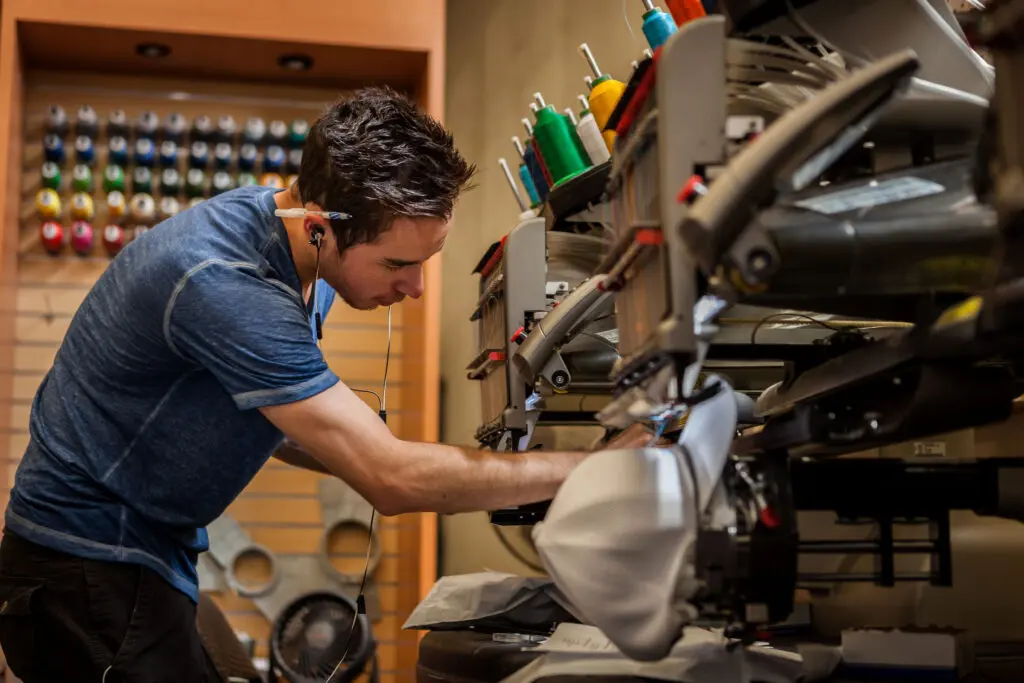
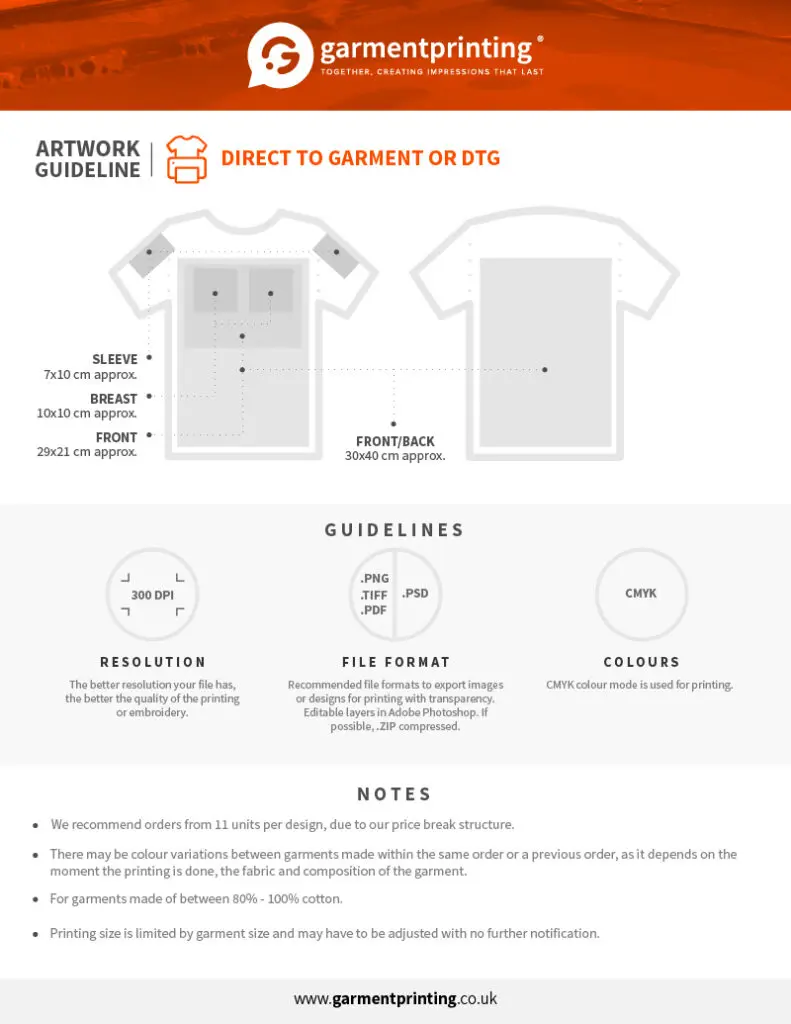
DTG printing (Direct-to-Garment) has grown rapidly in recent years as technology has improved, allowing high-quality, full-colour designs to be printed directly onto garments. This process works similarly to a digital printer, where clothing is placed into a specialised DTG machine and the design is applied directly to the fabric.
At Garment Printing, we use industry-leading DTG printing equipment to produce sharp detail, accurate colours and consistent professional results across personalised clothing and custom garment orders.
Screen Printing for Custom Clothing
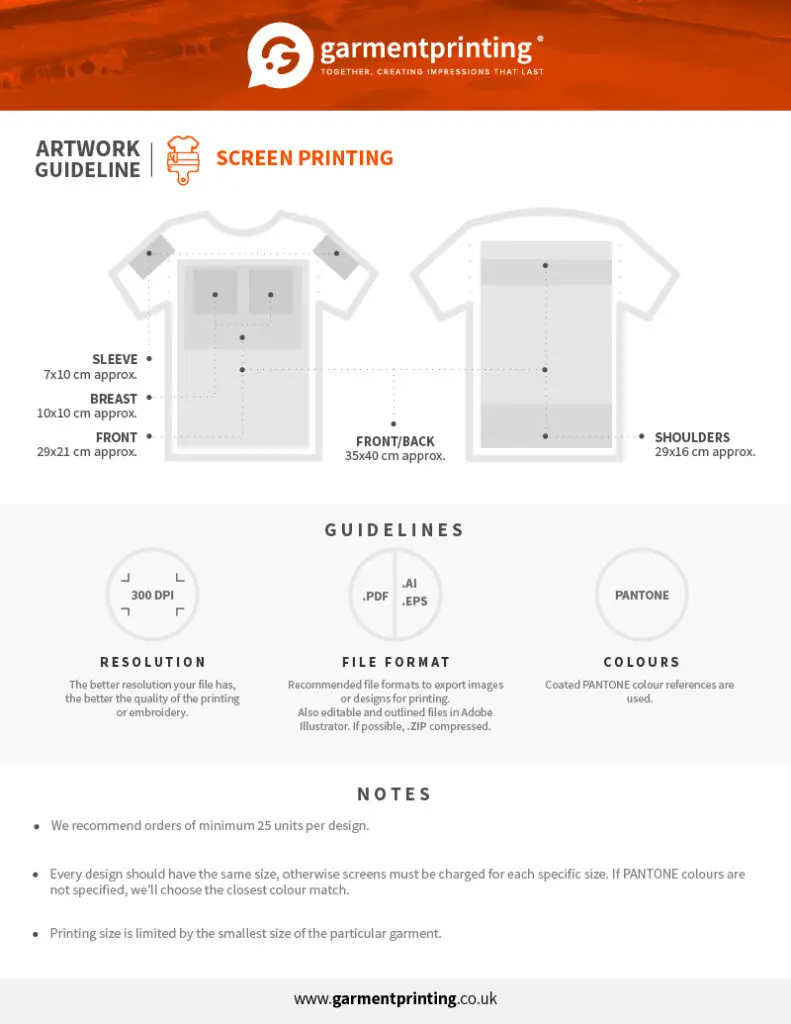
Screen printing is one of the most popular and widely used techniques for producing custom printed T-shirts and personalised clothing, delivering durable, high-quality results ideal for businesses, events and branded apparel. One of the key advantages of screen printing is the ability to match Pantone colours, ensuring corporate branding and colour consistency across every order.
Due to the setup process required to create printing screens, we typically recommend a minimum order quantity of 20 garments, making screen printing the most cost-effective option for bulk clothing orders.

Explore Our Printing Prices Guidelines
Explore printing prices guidelines — everything you need to get started with confidence, with expert support whenever you need it.
View All Printing Prices
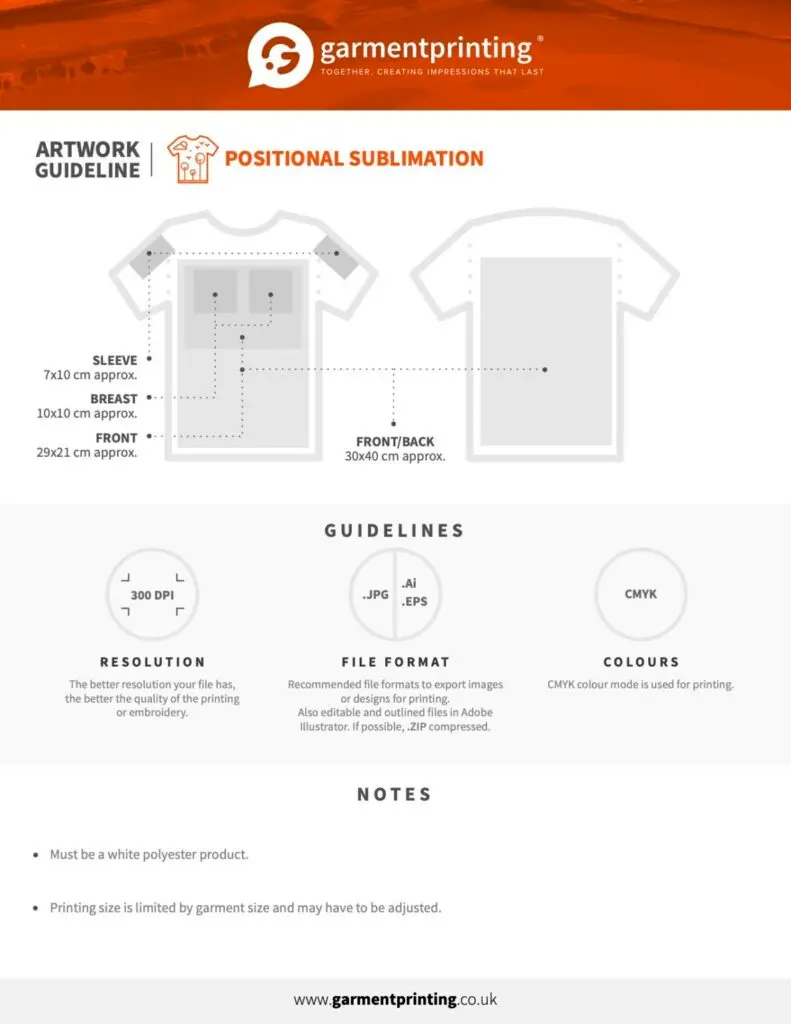
Sublimation Printing Guide for Custom Clothing
Sublimation printing is a technique where designs are first printed onto specialised transfer paper and then heat-pressed onto the garment, allowing the ink to bond directly with the fabric for a smooth and permanent finish.
This process enables fast production of vibrant, full-colour designs with excellent detail, making sublimation printing ideal for sportswear, promotional apparel and garments requiring lightweight, breathable prints with long-lasting colour performance.
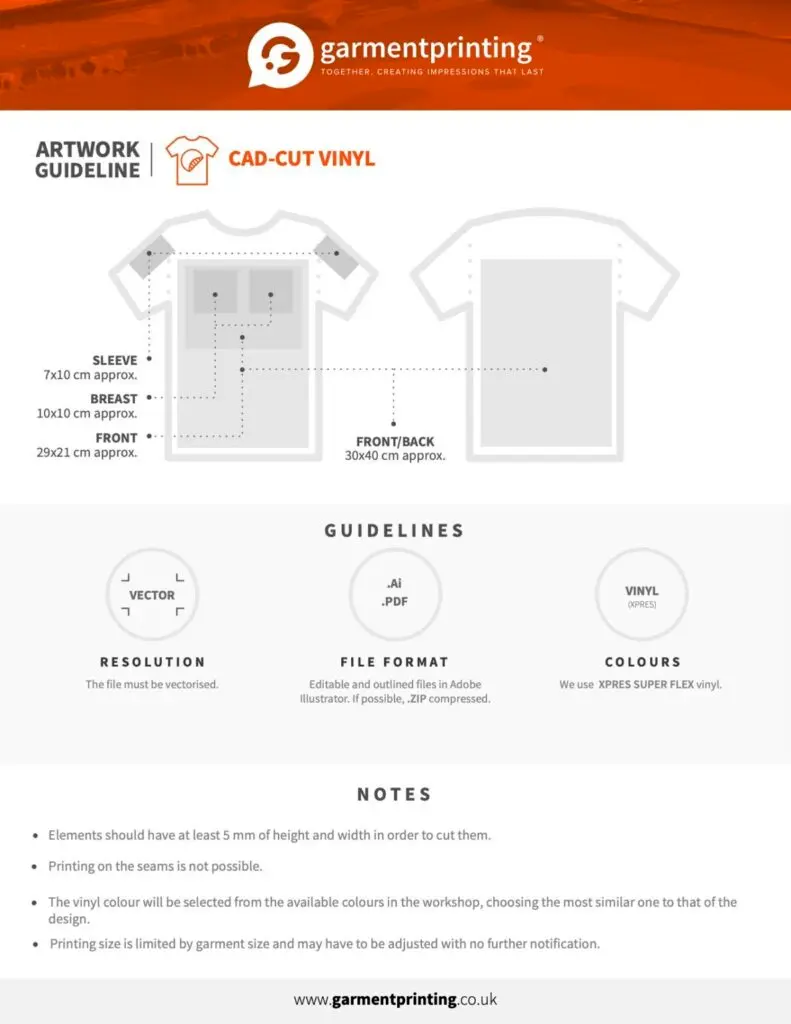
CAD-Cut Vinyl Printing Guide for Custom Clothing
CAD-cut vinyl printing uses a specialised textile vinyl material that is cut into the desired design and then heat-pressed onto garments. The design is first cut from coloured vinyl, excess material is removed, and the final graphic is applied to the fabric using a professional heat press to create a clean and durable finish.
This technique has become a popular choice for garment personalisation thanks to its durability, strong colour finish and suitability for names, numbers and simple logo applications, making it ideal for teamwear, workwear and promotional clothing.
Design Implementation & Artwork Approval
The final print quality depends heavily on the quality of the artwork supplied. For best results, designs should be provided in print-ready formats, preferably vector files such as .AI or .EPS, or high-resolution formats such as .PNG or .TIFF, prepared at a minimum of 150 DPI at full print size. Ideally, artwork should exceed 300 DPI or be supplied as a vector file for optimal clarity.
Images downloaded from the internet are often low resolution and may also be subject to copyright restrictions, so they are generally unsuitable for professional printing.
For garments of any colour, artwork should ideally have a transparent background. Files created in Photoshop or similar software should also be prepared in high resolution to avoid loss of print quality.
Since DTG printing is a digital process, any background or unwanted elements included in the artwork will also be printed. For this reason, designs should be supplied without background elements unless intentionally required.
Important: ensure artwork edges are clean and not pixelated. Pixelated borders can create unwanted white outlines on the final print. We recommend checking artwork at actual print size to confirm edges appear smooth and sharp.
When printing on coloured garments, the printing process applies a white base layer beneath colours to maintain vibrancy. Blurred edges or semi-transparent areas may therefore affect the final appearance and should be avoided where possible.
Please note: all artwork files are reviewed before production. We create visual mock-ups for every order and printing only begins once artwork approval has been confirmed.

Compare Printing Techniques for Custom Clothing & Branded Merchandise
Compare printing techniques, materials and finishes to choose the best solution for your brand.
Artwork & Printing Guidelines: Things to Consider Before Production
1. Print positions and size requirements
Consider where your design will be placed and the print size required. Common positions include front or back prints (A4 or A3), sleeves, left or right chest, across the shoulders, lower back, and personalised names or numbers.
2. Preferred printing technique
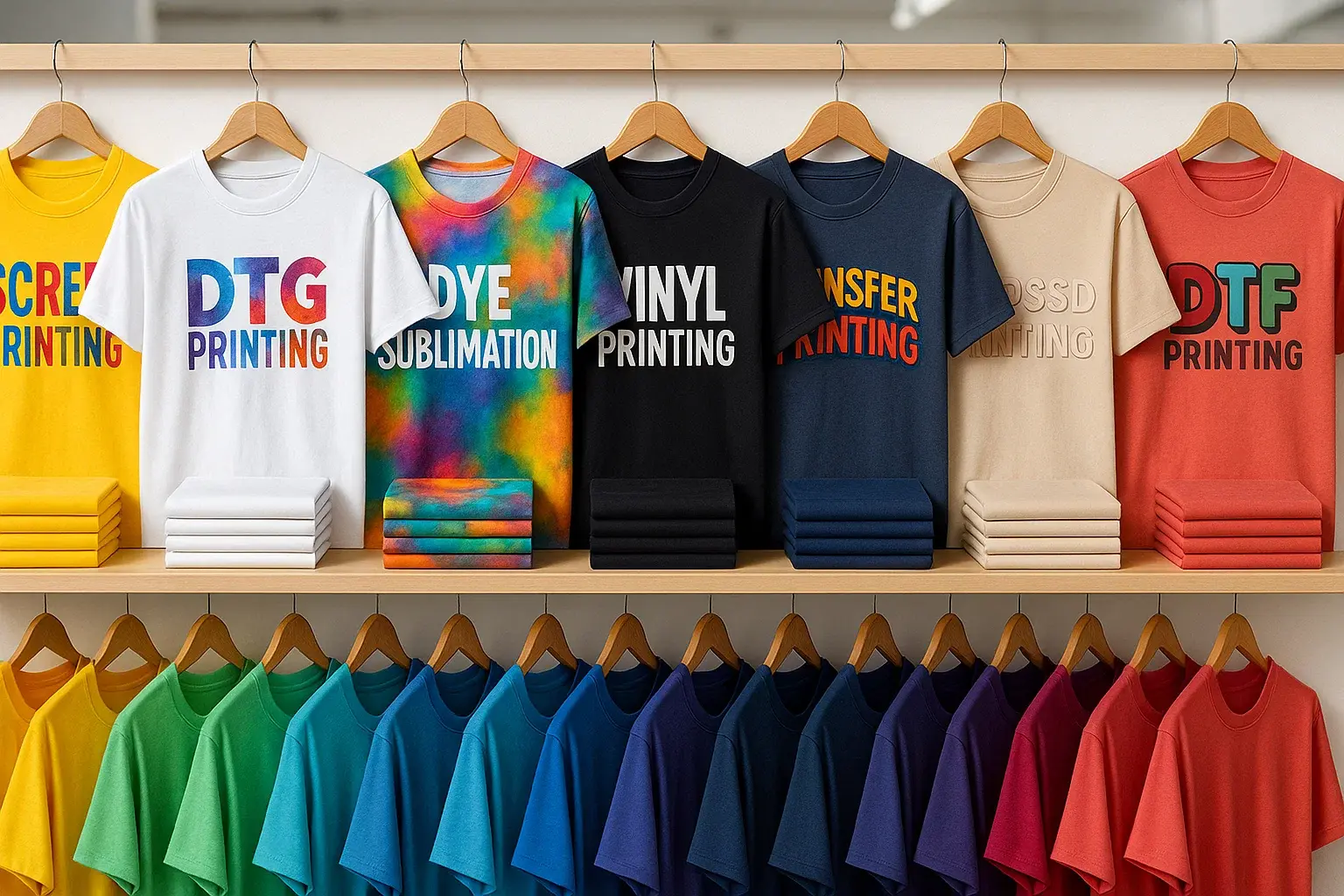
Different printing methods suit different designs and garments. Popular options include Screen printing, Direct to garment printing, Embroidery, all over T-Shirt printing, vinyl printing for names and numbers and solid colours designs. Our team can help recommend the best solution.
3. Accepted artwork formats
We accept artwork files created in Adobe Illustrator or Adobe Photoshop, including PNG, PSD, JPG, EPS, PDF and AI formats. Vector files are recommended for the best printing results.
If you are unsure whether your artwork is print-ready, simply send us your files and our team will review them and advise on any adjustments needed before production.
Get Expert Advice for Your T-Shirt Printing Project
Our team is always available to answer questions, provide expert advice and offer graphic design support whenever needed. Choosing what to print and where to place your design can be an important decision, so we guide you through every step to ensure the best possible result.
Simply review the guidelines, send us your artwork and our specialists will advise on the best printing approach to achieve professional results for your project.
If you need further advice about artwork preparation or which T-shirt printing technique suits your design best, contact us and a member of our team will guide you through the process. We review each order individually to ensure everything meets production requirements, so your garments or merchandise turn out exactly as expected.
From custom T-shirts and tote bags to hoodies and sweatshirts, we help businesses, events and individuals bring their designs to life.
And if you're working to a tight deadline, our next-day T-shirt printing service allows us to produce and dispatch orders within 24 hours whenever possible.
Frequently Asked Questions About Artwork Guidelines
Find quick answers to our most common questions about Artwork Guidelines for Personalised T-shirt Printing
We recommend supplying artwork in vector formats such as AI, EPS or PDF for the best printing results. High-resolution PNG or PSD files may also be suitable depending on the printing method.
Artwork should be supplied at a minimum resolution of 300 DPI at the final print size to ensure sharp and clear printing results.
Yes, our team can review and adjust artwork files when needed to ensure they meet printing requirements before production begins.
Whenever possible, artwork should be supplied in CMYK or with Pantone colour references to ensure accurate colour reproduction.
Colours can appear slightly different on fabric compared to screens due to material type and printing methods. Our team will advise if adjustments are recommended.
Artwork should be created at the intended print size or larger. Our team can help adjust sizing to suit the garment and printing method.
Low-resolution images may result in blurry or pixelated prints. We recommend providing high-quality files to ensure professional results.
Yes, we provide visual mock-ups or proofs for approval before production begins, ensuring everything is correct prior to printing.

Let’s Talk About Your Next Project
At Garment Printing, we support you from product selection to production and delivery. Share your requirements and timelines, and our team will guide your project from start to finish.
Get a Fast Quote